A Garden Takes Root at Seton Hall
Thursday, October 22, 2026
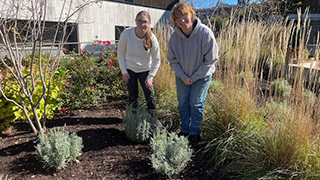
Sustainability Action Club members Kenneth Smith and Cameron Tarker check in on the lavender beds outside the University Center.
Stroll along the walkway gardens behind the University Center and you’ll come across beds of silvery lavender, fragrant lemon balm and verdant clusters of rosemary, thyme and oregano. A new garden is taking root on the South Orange campus, adding greenery and creating opportunities for students to get involved in sustainability efforts.
The garden supports Priority 5 of Seton Hall’s Strategic Plan, which focuses on developing sustainable resources. The project also demonstrates the value of collaboration between Facilities Engineering and the Sustainability Action Club. By combining facilities expertise with student initiative, the project creates experiential learning opportunities, promotes environmental stewardship and supports the University’s Catholic Mission to care for our common home.
“Beyond providing fresh herbs, the garden serves as a visible, hands-on example of how smaller campus initiatives complement larger efforts to reduce energy consumption, conserve resources and contribute to a more sustainable lifestyle,” says Victoria Pivovarnick, associate vice president of facilities and business affairs.
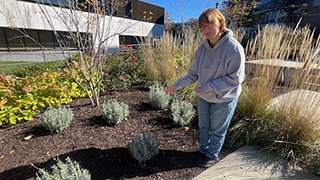
Smith, an environmental studies major, researched varieties of herbs that would be well suited for the new campus garden.
With Pivovarnick’ s encouragement, Kenneth Smith, a senior majoring in environmental studies who leads the Sustainability Action Club’s horticulture and wildlife committee, researched plants that would be well-suited for the campus environment. He considered varieties that could withstand New Jersey’s changing temperatures, while being less appealing to the rabbits and occasional deer that visit campus.
“Seeing this makes me very happy,” Smith said after visiting the garden for the first time last week. “We worked really hard to select the right plants for the garden.”
Four garden beds located on the east side of the walkway leading to the dining center feature three varieties of lavender, along with rosemary, thyme, lemon balm and oregano. Planters of mint are planned for the next phase of the project, with additional herbs scheduled to be planted when the warmer weather returns.
A drip irrigation system helps keep the garden watered, eliminating the need for regular manual watering. Once the plants are established, students will be able to harvest the herbs, with one important guideline: Never remove more than one third of the plant at a time to allow it to continue growing.
Students who want to pitch in may also have an opportunity to plant the rest of the garden in the spring. In the meantime, Pivovarnick says she's looking for students to help make plant covers to protect the rosemary and lemon balm before the winter weather arrives.
Sustainability Action Club President Mya Brooks hopes the garden will inspire more students to work together on environmental initiatives, from volunteering outdoors to finding new ways make the Seton Hall campus and the local community greener.
The club promotes sustainable action, environmental education and advocacy, Brooks says. “We strive to create a connected community of students, university employees and community partners who are committed to reducing their environmental impact and are conscious about the impact their choices have on our earth.”
Students interested in getting involved with the Sustainability Action Club’s bi-weekly general business meetings can find the club on Campus Groups or follow @sustainability_shu on Instagram.