Fall Lonergan Symposium Explores Mysticism, Method and Community
Thursday, October 22, 2026
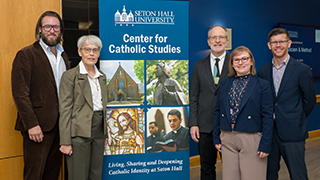
Jonathan Heaps, Mary Frohlich, Kevin L. Hughes, Amy Maxey and Patrick R. Manning at The Fall Lonergan Symposium.
Seton Hall University’s Center for Catholic Studies and Bernard J. Lonergan Institute hosted the second annual Fall Lonergan Symposium, “Mysticism and Method,” on October 8, 2026, in the Chancellor’s Suite of the Bishop Dougherty University Center. Part of Contemplative Community Week, the gathering explored how Lonergan’s thought helps scholars understand Christian mysticism and the relationships among spiritual experience, historical interpretation and community.
The program featured Mary Frohlich, RSCJ, Ph.D., professor emerita of spirituality at Catholic Theological Union and visiting scholar at Boston College’s Clough School of Theology and Ministry, and Amy E. W. Maxey, Ph.D., assistant professor of spirituality and Rolheiser Chair in Spirituality at the Oblate School of Theology. Kevin L. Hughes, Ph.D., chair of theology and religious studies at Villanova University, served as respondent. Jonathan Heaps, Ph.D., director of the Bernard J. Lonergan Institute, hosted the discussion.
Frohlich revisited her research on Teresa of Ávila’s Interior Castle to examine how mystical consciousness transforms a person’s relationship with God and others. Drawing on Lonergan’s understanding of the human person as a subject among other subjects, she considered the movement from an individual sense of self toward communion. Her presentation brought that work into conversation with historian Bernard McGinn’s scholarship on mystical consciousness, knowing and loving.
Maxey focused on the methodological foundations of McGinn’s work. She argued that Lonergan’s influence extends beyond theories of consciousness to the way Christian mysticism is studied historically. Attending to particular texts, languages, cultures and communities, she explained, can help scholars recognize both the richness of the tradition and the assumptions they bring to it.
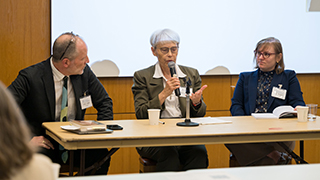
Panelists discuss mysticism and method at the Fall Lonergan Symposium in Seton Hall’s Chancellor’s Suite on October 8, 2026.
In his response, Hughes raised questions about the relationship between historical research and theological understanding, including whether writing history can itself be a transformative practice. The discussion that followed considered the possibilities and limits of applying modern concepts to earlier mystical texts and the importance of dialogue across different perspectives.
Reflecting on how scholars should pursue this work, Maxey emphasized its collaborative character: “It has to be done in community.” Her remarks echoed a theme running through the morning’s presentations: both the interpretation of Christian mysticism and the spiritual lives it describes take shape through relationships and ongoing conversation.
The symposium continued the Lonergan Institute’s collaboration with Villanova’s International Patristic, Medieval and Renaissance Conference, where the panelists presented again on October 9. The program advanced the Institute’s work of bringing Lonergan’s thought into dialogue with contemporary theological questions.
Watch the full “Mysticism and Method” symposium recording on YouTube.
Categories: Faith and Service