Inside the Core: Contrasting Modern Texts
Friday, April 17, 2026
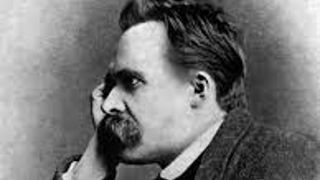
Frederich Nietzsche
Inside the University Core this week, in Core II, classes have moved into reading modern texts, such as the work of German philosopher Frederick Nietzsche, from his Genealogy of Morals in our textbook. Two other modern texts read around this time in the semester are Pope Francis’ Laudato Si and St. Oscar Romero’s The Violence of Love (consisting of excerpts from his sermons while Archbishop of San Salvador). The course centers around dialogue, and there could not be more polarized texts than Nietzsche’s Geneology and the two other texts. However, looking at them in conversation can help to elucidate aspects of each.
Nietzsche is known for coining the term “God is dead.” In an article in Commonweal in 2014, Terry Eagleton argues that Nietzsche may qualify as the world’s first “true atheist.” Going further than many modern writers who had abandoned or at least questioned faith, Nietzsche actively rejected it. His genealogy traces morality back to what he considers its origins – not revelation, as people of most faith traditions believe, but what was valued by the aristocratic and powerful during the time the words for good and evil developed. In classical times, particularly ancient Rome, being “good” meant being strong, powerful, able to conquer. He attributes the modern definition of goodness (being gentle, self-sacrificing, peace-making) to the advent of Christianity, which he conflates with Judaism (as the values of both confirm similar qualities such as those mentioned – goodness, gentleness, etc.), a development he attributes to “the priestly caste.” Nietzsche believed this transition was not something to celebrate.
Just a few quotes from his Geneology will illustrate his strong dislike of what he saw as current morality, based on Jewish and Christian values:
- One will have divined already how easily the priestly mode of valuation can branch off from the knightly-aristocratic and then develop into its opposite: this is particularly likely when the priestly caste and the warrior caste are in jealous opposition to one another and are unwilling to come to terms. The knightly-aristocratic value judgments presupposed a powerful physicality a flourishing, abundant, even overflowing health, together with that which serves to preserve it: war, adventure, hunting, dancing, war games and in general all that involves vigorous, free, joyful activity….(385).
- This Jesus of Nazareth, the incarnate gospel of love, this “Redeemer” who brought blessedness and victory to the poor, the sick and the sinners was he not this seduction in its most uncanny and irresistible form, a seduction and bypath to precisely those Jewish values and new ideals (386)?
- That lambs dislike great birds of prey does not seem strange: it only gives no ground for reproaching these birds of prey for bearing off little lambs. And if the lambs say among themselves: “these birds of prey are evil and whoever is least like a bird of prey, but rather its opposite, a lamb – would he not be good?” there is no reason to find fault with this institution of an ideal, except perhaps that the birds of prey might view it a little ironically and say: “we don’t dislike them at all, these good little lambs; we even love them: nothing is more tasty than a tender lamb” (393).
- To demand of strength that it should not express itself as strength, that it should not be a desire to overcome, a desire to throw down, a desire to become master, a thirst for enemies and resistances and triumphs, is just as absurd as to demand of weakness that it should express itself as strength (393).
In other words, in Nietzsche’s view, strength is equated with power, whether in war or economic/aristocratic status and he strongly believed those enjoying it need not empathize with or even refrain from “preying” on those on the lower strata; there is no “option for the poor” in his thinking.
It is interesting to examine the above quotes from Nietzsche in contrast to passages from the New Testament, particularly the Beatitudes of Jesus, here from Matthew 5:10:
Blessed are the poor in spirit,
for theirs is the kingdom of heaven.
Blessed are those who mourn,
for they will be comforted.
Blessed are the meek,
for they will inherit the earth.
Blessed are those who hunger and thirst for righteousness,
for they will be filled.
Blessed are the merciful,
for they will be shown mercy.
Blessed are the pure in heart,
for they will see God.
Blessed are the peacemakers,
for they will be called children of God.
Blessed are those who are persecuted because of righteousness,
for theirs is the kingdom of heaven.Blessed are you when people insult you, persecute you and falsely say all kinds of evil against you because of me. Rejoice and be glad, because great is your reward in heaven, for in the same way they persecuted the prophets who were before you.
Macarios, the Greek word translated here as “blessed,” can also mean “happy.” Jesus is clearly inverting the value system of strength typified by ancient Rome and celebrated by Nietzsche. In that system, “macarios” would not apply to the poor, the meek, etc., but to the rich, the strong, the powerful. Speaking even more strongly, in the parable of the sheep and the goats, Jesus not only says the poor, the meek, the suffering are “happy” or “blessed,” but that He Himself is present in them and “what you do to the least of these you do to Me” (Matthew 25: 31-46). Prior to the time of Jesus, we see also the Jewish prophets had encouraged the people of God to act similarly, as we see in Isaiah’s injunction: “Defend the cause of the poor and the orphan” and “oppress not the stranger” (Isaiah 1:17). Nietzsche saw these connections between Jewish and Christian values and conflates them in his writing, as we saw in the quotes from his Geneology. For him, Christianity was essentially a new form of Judaism, both to be rejected (in his view).

Pope Francis
Pope Francis and Oscar Romero both write in their respective texts completely in line with the biblical excerpts just given and found in many other places in the Bible. In Laudato Si, Pope Francis’s advocacy for care for the environment is deeply inter-connected with concern for the poor and marginalized, who are most affected by the culture of waste (mostly practiced by the rich countries). Noting how St. Francis linked care for nature with love for other humans, Pope Francis says: “Everything is connected. This concern for the environment thus needs to be joined to a sincere love for our fellow human beings and an unwavering commitment to resolving the problems of society” (63). He argues that the richer countries owe an “economic debt” to the poor countries because of the rich countries having contributed to many of the difficulties faced by the poor, including at times the need for climate migration.

St. Oscar Romero
Similarly, St. Oscar Romero, who advocated for the poor in his society during the late seventies until his death in 1980 (when he was martyred at the altar while saying Mass), spoke relentlessly of the need for concern for the poor and marginalized as a necessary part of faith. In words that Nietzche would have found deeply disturbing, Romero said: “Those who do not understand transcendence cannot understand us. When we speak of injustice here below and denounce it, they think we are playing politics. It is in the name of God’s just reign that we denounce the injustices of the earth” (Sept. 2, 1979).
When examining the works of Nietzche, Pope Francis and Oscar Romero, a clear line is drawn between the world of power and physical strength and the world of the poor, the meek, the victims of injustice. Though they disagree about how to apply it (with Nietzsche rejecting the position of the latter two writers), they agree on one thing: Jewish and Christian values require taking a stand with the poor, the suffering, the peace-makers and those who serve them. Nietzsche strongly rejected doing this whereas the other two writers completely affirm it, indeed require it. We see clearly today a similar juxtaposition of positions being expressed, particularly in many of the recent sermons of Pope Leo regarding peace and social justice and some of the negative responses to them and we need to be as clear as these three writers on what a genuinely religious position is regarding peace, social justice and good and evil.
Categories: Campus Life, Education, Faith and Service