Inside the Core Begins a New Semester
Thursday, September 3, 2026
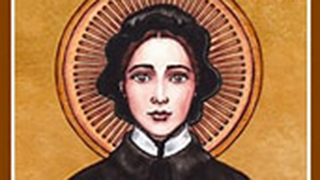
St. Elizabeth Ann Seton
Inside the Core, students return to a new semester with all the excitement and anticipation that it involves. In Core I, two changes have been made in the syllabus that are important. Now included are writings about and letters by St. Elizabeth Ann Seton, our patron, in the syllabus. Faculty are required to teach either these materials and/or one of the writings of Dorothy Day (who was already included as one of our modern author options). These women are both so important to the Core's Mission, location (being both based in NYC for much of their lives) and Seton Hall itself that the curriculum committee voted to make sure at least one of them would be included in every Core I class.
Many students and even faculty know little to nothing about Elizabeth Ann Seton though her name is all over campus, websites and literature. Reading a brief article (in America, the Jesuit journal) and several of Seton’s letters, students in one class used words like “compassionate, resilient, caring” to describe her. They were impressed by how she faced hardships like raising five children and her husband’s eight step-siblings after the death of his father; facing her husband’s bankruptcy, illness and then death; and the bias and rejection of her family when she became a Catholic. Despite all these difficulties, Seton pressed on in her devotion to God and to her faith, eventually becoming the first native-born American to be canonized as a saint in 1975.
Always a devout woman, as an Episcopalian, Seton worked with the poor and was sensitive to the needs of those around her, like the suffering immigrants quarantined in New York Harbor to whom her doctor father ministered. Her conversion to Catholicism came after her husband’s death (while she, their eldest daughter and William were in Italy for the hoped for restoration of his health) and she was impressed by what she saw of the Catholic faith in the Setons’ kind hosts, the Fillichy family. Though always remaining a deeply tender and personally involved mother of her children, Seton’s devotion to serving God through ministering to the poor and others on the margins led her to expand her charity further as she became increasingly outward-reaching. As one student said, after reading about her life and several of her letters, one is able to understand why her nephew, Bishop Bailey, names this university after his beloved aunt.
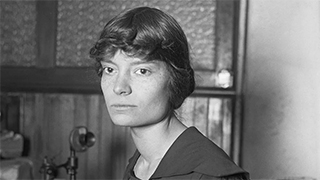
Servant of God, Dorothy Day
As for Dorothy Day, like Elizabeth Ann Seton, she was also a convert to Catholicism, in Day’s case after being an activist and anarchist in her earlier days. When she converted, after the birth of her daughter, Tamar, Day became, if anything, more radical and passionately committed than she was before to serving the poor and marginalized, whom her new faith and her Savior commanded her to serve. Peter Maurin came into her life, so she believed, as an answer to prayer and he gave her the theological and philosophical background to be an impetus to her activism. Together they started The Catholic Worker newspaper as well as Catholic Worker houses, a movement that has now spread all over the world.
Last year, the University community was honored to have Martha Hennessy, Dorothy Day’s granddaughter, speak to us at Seton Hall. She told some wonderful memories of her grandmother but also made the point that, while people love to hear about Dorothy’s piety, they are less eager to hear about her radicalism. However, both were integral to her spirituality.
Like Elizabeth Ann Seton, Dorothy Day lived a faith that was increasingly outward-reaching. The question asked of Jesus, “Who is my neighbor?” in Luke 10, leading up to the parable of the Good Samaritan, was answered by her in the same generosity of spirit Jesus illustrates in the parable – whoever is in need becomes the one to whom I must “be a neighbor.” Dorothy lived out this commitment to the poor, the marginalized, those most rejected by society faithfully and continuously until the day she died, in the Catholic Worker residence, MaryHouse, on Third Street in New York City.
As we begin a new year in the Core and at Seton Hall, we remember these two trail-blazers, Elizabeth Ann Seton and Dorothy Day, as they lived out many of the ethical, moral and religious questions examined throughout Core I and Core II.
Categories: Education