The Art of Community: The Wang Fangyu Collection of Asian Art
Tuesday, September 1, 2026
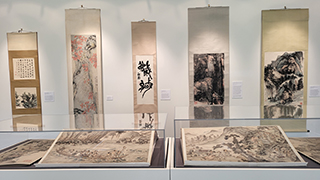
Landscape by Bada Shanren, 1699. Restored with the support of the Essex County Local Arts Program, 2025.
What can a collection of artworks tell us about the people who created, collected and shared them? The Art of Community: The Wang Fangyu Collection of Asian Art explores this question through a remarkable selection of works from Seton Hall University's Asian art collection. Built through the vision and friendships of influential scholar, artist and teacher Wang Fangyu, the exhibition reveals not only the richness of Chinese artistic traditions but also the personal connections that helped preserve and transmit those traditions.
The collection began with Wang himself. A respected scholar of Chinese language and culture and a longtime member of Seton Hall's faculty, Wang believed that works of art could serve as powerful tools for discovery. In the years leading up to his retirement in 1978, friends, colleagues, collectors, students and fellow artists donated more than 300 artworks in his honor. These gifts eventually formed the foundation of Seton Hall's Asian art collection. Although the collection includes works from Japan, Korea and India, Chinese art and artists remain at its heart.
At first glance, the exhibition offers a survey of Chinese art across centuries, from Ming and Qing dynasty paintings and ceramics to twentieth-century calligraphy and ink painting. Yet a closer look reveals another story: one of migration, friendship and cultural continuity. Many of the artists represented in the collection left mainland China during periods of political upheaval, particularly following the establishment of the People's Republic of China in 1949. They settled in Taiwan, Hong Kong and communities throughout the United States, carrying artistic traditions with them while adapting to new environments. The artworks they created and collected became a means of maintaining connections to their cultural heritage and to one another.
Several exhibition highlights demonstrate the remarkable breadth of those connections. Visitors will encounter A Hundred Drinkers in Fairyland, a portfolio of paintings donated by the influential collector and artist Wang Chi-chi'en (commonly known as C. C. Wang). One of the most important figures in the preservation of Chinese art in twentieth-century America, C. C. Wang appears repeatedly throughout the exhibition as a donor, an artist and a champion of his friend Wang Fangyu’s efforts to establish Seton Hall’s collection.
Modern and contemporary works reveal how Chinese artistic traditions continued to evolve in diaspora communities. Fang Zhaoling was a celebrated artist who studied under two of the 20th century’s most innovative artists, Zhao Shao'ang and Chang Dai-chien. Her painting Plum Blossom (1961), which hangs near works by Zhao and Chang, combines the expressive qualities of traditional Chinese brush painting with influences from Western artistic practice. Gifted by Wang himself, the painting reflects his interest in supporting living artists and introducing their work to American audiences.
The exhibition also highlights artists whose personal journeys mirror broader patterns of twentieth-century migration. Johnson Zhou Shixin 's Autumn Color in the West Mountains was created after the artist's relocation from mainland China to Hong Kong and later to Canada. The painting demonstrates how artists maintained a conversation with centuries-old landscape traditions even while building new lives abroad. Other works in the exhibition reveal the wide-ranging network of artists, collectors and scholars connected to Wang, whose relationships helped bring many of these works to Seton Hall.
One of the exhibition's most compelling themes is collaboration. The scroll For the New Year, created jointly by 10 artists, offers a vivid example of artistic exchange and collective creativity. Such works remind visitors that art is often the product not only of individual talent but also of communal relationships. Throughout the exhibition, donor correspondence, photographs and archival materials reveal the friendships and professional networks that brought these objects to Seton Hall.
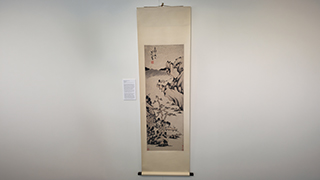
Landscape by Bada Shanren, 1699. Restored with the support of the Essex County Local Arts Program, 2025.
Historical masterpieces are presented alongside these modern stories. Works attributed to celebrated figures such as Dai Xi and Bada Shanren (Zhu Da) connect twentieth-century artists and collectors to centuries of Chinese artistic heritage. A Hundred Drinkers in Fairyland is among the exhibition's most significant treasures. This seventeenth-century album by Chu Shu-Chih depicts a lively gathering of figures engaged in drinking, conversation and scholarly pursuits. Such scenes belonged to a long tradition in Chinese painting that celebrated literary culture, friendship and the pleasures of cultivated leisure.
Wang's own artistic practice is represented through the painting Baby Phoenix. This work and other examples highlight the central role of calligraphy in Chinese artistic and intellectual life. For centuries, calligraphy has been regarded as one of China's highest art forms, requiring mastery of brush technique, deep knowledge of literary and historical traditions and years of disciplined practice. More than a means of communication, calligraphy has long been valued as a reflection of an individual's learning, character and artistic sensibility. Wang's work reflects that tradition while also demonstrating his lifelong dedication to preserving and teaching Chinese culture.
The exhibition also invites visitors to engage directly with one of the traditions represented in the gallery. In Chinese calligraphy and painting, artists commonly sign their works using carved seals that function as both signatures and personal artistic identifiers. These seals, often made from stone and engraved with names, pseudonyms or studio names, became an important part of a calligrapher's artistic practice and identity.
Thanks to a collaboration with Seton Hall's Maker Studio, visitors will have the opportunity to handle a 3D-printed replica of a soapstone seal carved by Zhao Heqin, an accomplished calligrapher and seal carver whose collaborative work For the New Year is featured in the exhibition. Using the replica seal, visitors can create their own seal impressions to take home as a memento of the exhibition. The activity offers a hands-on introduction to the tools and techniques of Chinese calligraphy, giving visitors a small taste of the experience of leaving one's mark as a calligrapher and artist.
Beyond the gallery, a series of public programs will further explore the collection and its wider cultural context.
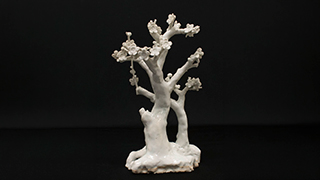
Plum tree in blossom, Dehua porcelain, 79.40.10
From 5:30-6:30 p.m. on November 4, scholar Qiumeng Fu will discuss the evolution of Wang Fangyu's calligraphic style and practice, tracing his relationships with artists and collectors throughout New York and New Jersey. Drawing on archival research and close study of Wang's work, Fu's lecture will illuminate the social and artistic networks that shaped the collection.
A second program, led by tea master Fengxiao Liu (date to be announced), will introduce visitors to the traditions of Chinese tea culture. Through a traditional tea ceremony, Liu will explore Cha Dao, or "the Way of Tea," emphasizing the spiritual, philosophical and communal dimensions of tea practice.
The exhibition's final public lecture will take place on November 18 from 5-6 p.m., followed by a reception. Shao Wang will discuss the formation of his father's renowned collection of works by the seventeenth-century painter Bada Shanren (Zhu Da) and the scholarship that helped establish Wang as one of the leading authorities on this important artist.
Together, the exhibition and its accompanying programs invite visitors to think about art not simply as a collection of objects but as a record of relationships. The paintings, calligraphy and albums gathered by Wang Fangyu tell stories of generosity, migration, mentorship and shared cultural identity. More than a survey of Chinese art, The Art of Community is a portrait of the people who preserved artistic traditions across oceans and generations, ensuring that they would continue to inspire new audiences at Seton Hall University and beyond.
Categories: Arts and Culture, Nation and World, Research