New Jersey Commission on Cancer Research Awards Calianese $100,000 for Immunotherapy Study
Thursday, October 15, 2026
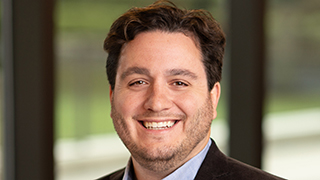
David Calianese, Ph.D., Assistant Professor of Biological Sciences and holder of the Elizabeth A. Mount Endowed Professorship in Molecular Biology in Cancer Research.
David Calianese, Ph.D., an assistant professor in the Department of Biological Sciences within Seton Hall University’s College of Arts and Sciences, has earned a $100,000 grant from the New Jersey Commission on Cancer Research (NJCCR) for his project, “Investigating Phosphatidylserine Externalization on Activated Immune Cells for Novel Immunotherapy Approaches.” The project explores a question at the frontier of immunotherapy research, with potential implications for cancer treatment: why does a molecule associated with dying cells also appear on living immune cells and what might it tell us about their ability to respond to cancer?
Calianese holds the Elizabeth A. Mount Endowed Professorship in Molecular Biology in Cancer Research. He earned his Ph.D. at Rutgers University and pursued postdoctoral research at Osaka University’s Immunology Frontier Research Center in Japan. His work has appeared in Proceedings of the National Academy of Sciences, Nature Communications, Cancer Research, The Journal of Immunology, Journal of Biological Chemistry, Cell Death & Differentiation, Cell Communication and Signaling, Immunological Reviews, Frontiers in Immunology, Scientific Reports, International Journal of Molecular Sciences, International Journal of Molecular Medicine, International Journal of Oncology, Oncology Letters, Cancers, Cells, The FASEB Journal, International Review of Cell and Molecular Biology and Methods in Cell Biology.
Across these studies, he has continued to investigate how cells communicate, how the immune system responds and how this understanding might inform cancer treatment. Born and raised in New Jersey, U.S., he brings a personal connection to this purpose, hoping to help improve cancer care for people in his home state, across the nation and around the world.
Established in 1983, NJCCR is New Jersey’s only statewide commission dedicated to funding cancer research, awarding grants through rigorous peer review to support scientific excellence. Its mission connects fundamental discovery with progress toward clinical care while preparing future generations of cancer researchers. Its broader agenda encourages emerging technologies, including artificial intelligence and helps scientists develop research toward additional funding from sources such as the National Institutes of Health.
Calianese described NJCCR as a “wonderful, wonderful organization,” bringing together clinicians, researchers, educators, public officials, advocates and fundraisers “all for one common mission”: helping New Jersey residents affected by cancer. The American Cancer Society estimates 60,740 new cancer cases in New Jersey in 2026, underscoring the public importance of research that may contribute to better treatment.
Calianese’s research begins with a process essential to healthy life: the removal of cells that are damaged or no longer needed. He studies phosphatidylserine or PS, a phospholipid normally found on the inner side of a cell’s membrane. When a cell undergoes apoptosis, a form of programmed cell death, PS moves to the outer surface and becomes what he calls an “eat me” signal. Immune cells called macrophages recognize this signal and engulf the dying cell, releasing signals that help reduce inflammation and protect nearby healthy tissue.
Inside tumors, however, this protective response can have an unintended effect. Tumors sometimes grow so quickly that some cells die from a lack of oxygen and nutrients. When macrophages clear these dying cells, the same signals that normally limit inflammation may also weaken the immune response against cancer, making it easier for surviving cancer cells to escape attack. Existing immunotherapies called checkpoint inhibitors work by blocking other signals that hold back T cells, immune cells that can recognize and attack cancer cells. Calianese compares these inhibitory signals to a car’s “braking system.” Melanoma has “benefited wonderfully from immunotherapies,” he noted. His research seeks additional treatment targets that could improve immunotherapy for more patients with solid tumors while limiting harm to healthy tissue.
Yet PS presents another scientific puzzle. It also appears on the surface of living T cells, including some whose ability to fight cancer has weakened in a state known as T-cell exhaustion. “Why they do this, we’re not exactly sure,” Calianese said. His team will “learn more about this process in T cells and figure out whether or not this is a viable target for therapeutics.”
NJCCR funding will support CRISPR-Cas9 gene-editing experiments to identify the genes involved, along with the purchase of research equipment and supplies, including an electroporator. The equipment will help the team extend its experiments from established laboratory cell lines to immune cells isolated directly from human blood, an important step in evaluating the findings’ relevance to future treatments. Other laboratories on campus will also have access to the equipment.
The award will also provide materials for doctoral students’ work under Calianese’s guidance and help cover publication and conference costs. He emphasized sharing research findings “with the rest of the scientific community.” The team hopes to publish in high-impact journals and present its results at scientific meetings. By supporting both investigation and dissemination, NJCCR provides the resources to investigate a promising question and share findings that other researchers may build upon.
Jonathan Farina, Ph.D., dean of the College of Arts and Sciences, applauded Calianese for integrating successful grantsmanship with excellent teaching, publication and commitment to the campus community: “This grant is the first of many for David, who is extraordinarily talented and invested in every aspect of his work, from classroom teaching and student mentorship to impactful research. An essential part of successful graduate programs in the sciences is teaching students how to secure funding to support meaningful research and manage a lab. So this NJCCR grant advances knowledge in oncology while also strengthening our graduate students’ education.”
Students have helped develop the project since its early stages. Calianese credits Seton Hall’s startup funding and student contributions with helping establish the laboratory and generate preliminary data for the grant application. Undergraduate, master’s and doctoral students have already spent months training and working on the project. They will continue to contribute in different capacities, gaining further experience alongside Calianese and their fellow researchers.
The team includes students from a range of disciplines. Most come from the College of Arts and Sciences, with others from different colleges. Calianese welcomes interest from students across disciplines and considers “what the career goals are, what the enthusiasm is and what curiosity they bring to the table.” Some are preparing for careers in medicine; others anticipate research careers in the public or private sector. Many come from New Jersey and hope to build their futures here, Calianese explained. He also sees their experience extending to different projects and settings, where they may “contribute to cancer research in different ways.”
“We’re working towards something big together,” Calianese said. Concern for people gives the research its direction; respect for what remains unknown leaves room for discovery. Calianese’s scientific leadership and mentorship, together with NJCCR’s support, give both practical form through the continued exploration of unanswered questions while students develop the knowledge and skills to carry that inquiry forward.
As Dean Farina added, “the College of Arts and Sciences aspires to engage all STEM students—undergraduate and graduate—with this kind of meaningful, hands-on research, research that teaches them how to conduct cutting-edge science and that positively affects the lives of those around them.”
*The Office of Grants and Research Services (OGRS) is dedicated to supporting efforts to highlight grants awarded at Seton Hall University. We welcome story ideas from across campus. If you have a project or story to share, please contact OGRS at (973) 761-9424 or grantsoffice@shu.edu.
Categories: Health and Medicine, Research, Science and Technology