Catholic Leaders Examine AI’s Role in Ministry
Monday, December 15, 2025
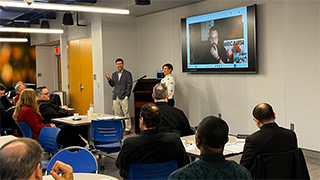 The Center for Catholic Studies, in partnership with the Archdiocese of Newark (RCAN), hosted a workshop, "Shepherds
of the Digital Age: AI and the Future of Catholic Ministry," bringing together researchers,
industry experts, and clergy to examine how artificial intelligence is reshaping human
life, formation, and pastoral practice.
The Center for Catholic Studies, in partnership with the Archdiocese of Newark (RCAN), hosted a workshop, "Shepherds
of the Digital Age: AI and the Future of Catholic Ministry," bringing together researchers,
industry experts, and clergy to examine how artificial intelligence is reshaping human
life, formation, and pastoral practice.
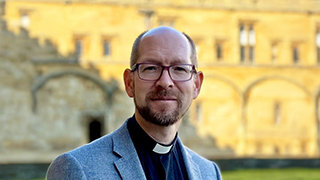
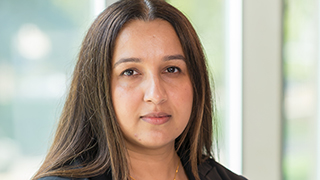
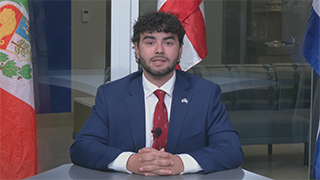
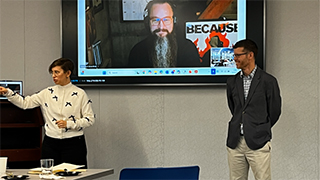
The session featured Patrick Manning, Ph.D. (Center for Catholic Studies) and Ruth Tsuria, Ph.D. (Communication, Media and the Arts) from Seton Hall University, and Taylor Black (director of AI and venture ecosystems at Microsoft and founding director of the AI and Emerging Technologies Institute at the Catholic University of America).
The discussion focused on AI’s intersection with human thought, creativity, community and ministry. Presenters emphasized that while AI can accelerate workflows, aid research and support educational or pastoral planning, it remains strictly a tool, unable to substitute for relational or sacramental presence. Speakers highlighted that digital life has already blurred the boundaries between prayer, work, entertainment and communication.
This “flattening” complicates how individuals encounter beauty, meaning and attention. In this context, AI can assist but must be used intentionally to preserve contemplation, reflection and authentic relationships. Sam McDonald, program manager for the Center, noted, "The workshop reminded us to meet new technologies with faith-filled clarity. We named real concerns and the opportunities that arise when we navigate them with discernment and hope. I’m grateful to all who helped foster such a thoughtful and timely dialogue."
Throughout the workshop, presenters underscored both the promise and limits of AI. They highlighted its ability to generate drafts, organize Church documents, and assist educators, while cautioning that it cannot discern truth, facilitate formation, or replace pastoral accompaniment. Concerns included overreliance on technology, erosion of contemplative habits, and diminished appreciation for artistic struggle. Presenters affirmed poetry, silence, reading and embodied learning as essential practices that nurture depth.
 In educational and ministerial settings, participants called for a human-centered
approach that teaches critical thinking and ensures AI serves rather than supplants
intellectual and communal life. Tools such as Magisterium AI can help locate sourced
Church documents, but theological interpretation and pastoral judgment remain necessary.
Discussions also addressed AI-generated media and a resulting crisis of trust, which
many agreed draws people back toward embodied community.
In educational and ministerial settings, participants called for a human-centered
approach that teaches critical thinking and ensures AI serves rather than supplants
intellectual and communal life. Tools such as Magisterium AI can help locate sourced
Church documents, but theological interpretation and pastoral judgment remain necessary.
Discussions also addressed AI-generated media and a resulting crisis of trust, which
many agreed draws people back toward embodied community.
Reverend Matthew Gonzalez, rector of the Cathedral Basilica of the Sacred Heart, reflected, "'Go and make disciples of all nations' remains Christ's enduring command to His Church. In our time, this mission includes wisely discerning both the promise and the perils of emerging technologies like AI and digital media, ensuring they become bridges rather than barriers to the Gospel. This workshop equipped Catholic leaders, clergy and laity alike, with renewed confidence to engage these tools boldly and fruitfully for the work of evangelization."
The workshop concluded that Catholic institutions have a pivotal opportunity to model ethical, dignifying AI use. With discernment, ministers and educators can reduce administrative burdens and create more space for relational and sacramental engagement. AI must always play a supportive role, never a substitutive one, ensuring that technology serves the interior life, strengthens community, and upholds the dignity of the human person in an increasingly digital world.
As Manning reflected,
This event embodied much that is best about the Catholic university. Seton Hall (the Center and the Seminary in particular) utilized the gifts of our faculty and our network of experts to draw upon the rich resources of the Catholic tradition to address one of the biggest issues facing us today. We were delighted by the positive response from the priests of the Archdiocese, and we look forward to future collaborations with the Office of Clergy Personnel.
Categories: Faith and Service, Science and Technology