How STEM Connect is Transforming Undergraduate Research at Seton Hall
Monday, June 29, 2026
 The College of Arts and Sciences at Seton Hall University is continuing to strengthen its commitment to undergraduate
scholarship and experiential learning through the Dean’s STEM Connect Undergraduate Summer Research Award, an initiative that provides students with the opportunity to pursue intensive, faculty-guided
research projects during the summer months. Designed to cultivate both academic growth
and professional development, the program pairs ambitious undergraduate researchers
with dedicated faculty mentors in order to foster meaningful collaboration, independent
discovery and hands-on scientific inquiry.
The College of Arts and Sciences at Seton Hall University is continuing to strengthen its commitment to undergraduate
scholarship and experiential learning through the Dean’s STEM Connect Undergraduate Summer Research Award, an initiative that provides students with the opportunity to pursue intensive, faculty-guided
research projects during the summer months. Designed to cultivate both academic growth
and professional development, the program pairs ambitious undergraduate researchers
with dedicated faculty mentors in order to foster meaningful collaboration, independent
discovery and hands-on scientific inquiry.
At the center of the initiative is Gregory Wiedman, Ph.D., associate professor in the Department of Chemistry and Biochemistry and director of the STEM Connect program. For Wiedman, undergraduate research is not simply an academic exercise, but a transformative educational experience capable of shaping students’ futures both inside and outside of the classroom.
“Our goal for STEM connect is to link up ambitious students with dedicated faculty mentors so that, together, they can do some awesome science,” said Wiedman.
Wiedman’s passion for mentorship is rooted in his own academic journey. As an undergraduate student at the University of Pennsylvania, he became fascinated by the process of scientific discovery after reaching out to professors in search of research opportunities. What began as curiosity eventually developed into a deep appreciation for organic synthesis, experimentation and the creative problem-solving that research requires. He later continued his studies at Johns Hopkins University, where his experiences in the laboratory further solidified his desire to pursue a career in academia.
“What pushed me into academia was doing research myself,” Wiedman explained while reflecting on the opportunities that shaped his own trajectory. “I really enjoy working with students and helping them discover what they are capable of.”
That same philosophy is reflected in the structure of the Dean’s STEM Connect Undergraduate Summer Research Award. The program was intentionally designed to bridge the gap between students and faculty mentors while creating sustainable opportunities for undergraduate researchers to engage in substantive, independent work. Unlike traditional classroom assignments or laboratory exercises with predetermined outcomes, the program immerses students in the unpredictable and evolving nature of authentic research, where setbacks, revisions and innovation are all part of the process.
Students selected for the program receive a $4,500 stipend along with a $500 research supply budget to support project materials, conference presentations and other approved academic expenses. Faculty mentors also receive a stipend in recognition of the extensive time and guidance they invest throughout the summer. According to Wiedman, the financial support is particularly meaningful for students who may otherwise be unable to dedicate significant time to research due to outside employment or distance from campus.
“For out-of-state students especially, it can be difficult to stay over the summer,” Wiedman noted. “The stipend really helps make these opportunities accessible.”
The research experience itself is structured similarly to a professional part-time position, with students expected to work approximately 20 to 30 hours per week between May and August. Each student collaborates closely with a faculty mentor to develop a detailed timeline that outlines research goals, training periods, experimentation phases and potential presentation or publication opportunities. The flexibility of the program also allows projects to be tailored to each student’s previous level of experience, welcoming both seasoned researchers and students entering a laboratory setting for the first time.
Wiedman emphasized that mentorship serves as the foundation of the program’s success. Because many research projects involve unanswered questions and experimental uncertainty, faculty guidance becomes critical in helping students navigate challenges, troubleshoot setbacks and develop confidence in their work.
“Research is different from a general lab class where everything is expected to work out,” Wiedman said. “A lot of this is work that no one has done before, so having a professor there to help guide students through that process is incredibly important.”
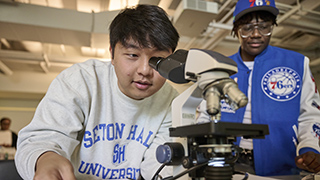
This year’s projects demonstrate both the interdisciplinary scope of the program, and the real-world impact undergraduate research can have across STEM fields. One research team, composed of students Sajid Ahmed and Ishaan Tangirala under the mentorship of Tina Chu, is investigating the antibacterial potential of EC16, a modified green tea derivative that may help reduce biofilm formation and bacterial buildup. Their work focuses initially on dental composites and plaque, though the implications of the research extend far beyond oral health.
Ahmed explains, “We aim to explore whether it (EC16) can reduce bacterial buildup and the formation of biofilm, a community of microorganisms with known resistance.”
Ahmed noted that biofilms are associated with a variety of major public health and industrial concerns, including implant and catheter infections, food processing contamination and plumbing system maintenance. Through the project, he has gained experience not only in microbiological techniques, but also in biomaterials research, experimental design and translational science.
“I greatly appreciate the opportunity to participate in this program, which integrates my lab experience and mentorship from Chu with meaningful translational implications for public health,” Ahmed said.
Chu praised the students for their thoughtful and analytical approach to the project, noting that they have demonstrated a strong ability to connect laboratory work to larger societal challenges.
“What stands out so far is how they connect the work on EC16 to broader challenges related to biofilm-associated infections and materials,” Chu said. “They ask good questions, think through what they observe and work well as a team. These are not easy habits to develop early on, and they are off to a strong start.”
Another student researcher, Elizabeth E. Foreman, is working alongside Jessica Dimka
on a project examining World War I death records from New Jersey through an anthropological
and epidemiological lens. Their research focuses on identifying patterns related to
race, class, disease and country of origin among soldiers whose causes of death extended
beyond combat injuries.
Foreman explained that the project grew out of her interest in disease studies after
taking Dimka’s course, “Plagues and Peoples,” during the fall semester. She described
the experience as both intellectually rewarding and professionally formative.
“I’m very grateful not only for Dimka’s assistance and faith in me, but for programs like the Dean’s Undergraduate Summer Research Award, as they give undergraduates a chance to conduct research ourselves and receive mentorship and advisement from professors already established in the fields we hope to enter,” Foreman said.
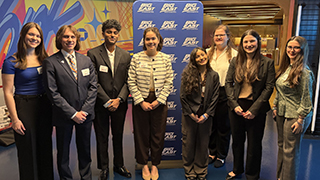
Beyond the laboratory and archival work itself, the program also encourages students to present their findings at forums such as the BIG EAST Undergraduate Research Poster Symposium and the Petersheim Academic Exposition, helping students develop the professional communication skills necessary for graduate study, publication and careers in research. Although the program has only existed for a short time, early student achievements have already demonstrated its growing impact.
Looking ahead, Wiedman hopes to continue expanding the initiative through sustainable funding, increased alumni involvement and broader faculty participation across STEM disciplines. He noted that creating long-term support systems for undergraduate research remains one of the program’s primary goals.
“To make it sustainable is the biggest vision for the future,” Wiedman said. “We want to continue building opportunities for students, keep up with competitive institutions and create a culture where undergraduate research can continue to thrive at Seton Hall.”
If you are interested in more information about this undergraduate research opportunity, please contact Professor Gregory Wiedman or visit Seton Hall University’s STEM Connect page.
Categories: Education, Research, Science and Technology