

Curriculum
The comprehensive curriculum for the Seton Hall Master of Science in Physician Assistant Master of Science in Physician Assistant program is designed to provide extensive clinical experience while promoting competence in research and a solid foundation in basic sciences and physical examination skills.
The three-year, 96-credit Master of Science in Physician Assistant curriculum is team-taught by practicing physician assistants, physicians and instructors with doctoral training in a variety of areas. A blend of traditional lectures, online coursework and problem-based learning is used throughout the year to ensure that new knowledge can be practically applied.
Didactic Education
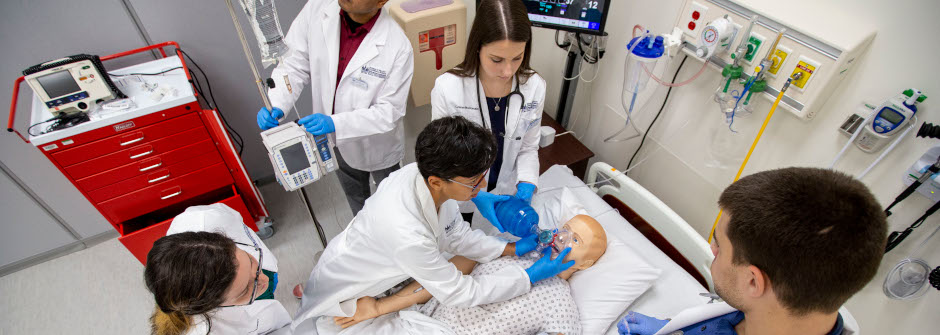
Didactic education at Seton Hall’s Master of Science in Physician Assistant program provides the foundational knowledge students need to succeed in clinical practice. Through a rigorous, fast-paced curriculum, students study subjects such as anatomy, pharmacology, pathophysiology, and clinical medicine, building a strong scientific and diagnostic framework. Instruction combines lectures, case-based learning, and simulation to promote critical thinking and real-world application. This phase prepares students to confidently transition into clinical rotations, where they apply their knowledge in diverse healthcare settings under professional supervision. All didactic instruction is located at our Interprofessional Health Sciences Campus.
For details on didactic coursework, please view the Course Catalogue.
Clinical Education
Early exposure to patients is a cornerstone of the Seton Hall Master of Science in Physician Assistant program. Students enter the clinical environment in the first semester of the program to practice history-taking and physical examination skills. The second and third years of the program are characterized by extensive exposure to patients. Students complete a minimum of 52 weeks of core and elective rotations in a variety of settings, studying for 4 to 8 weeks in each of the following clinical rotations, in addition to elective opportunities:
- Surgery
- Internal Medicine
- Pediatrics
- Obstetrics/Gynecology
- Emergency Medicine
- Psychiatry
- Outpatient Medicine
- Family Practice
This extensive clinical experience prepares our graduates to be confident, flexible and able to make an immediate impact in the clinical setting.
See our Frequently Asked Questions for more information about the Seton Hall Master of Science in Physician Assistant curriculum and matriculation.