Sadia Cheema Examines Student Water Preferences and Sustainability
Friday, October 16, 2026
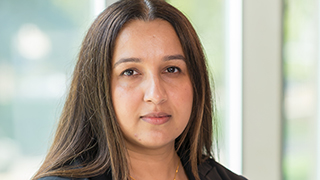 Sadia Cheema, Ph.D., assistant professor in the Department of Communication, Media and the Arts at Seton Hall University, recently co-authored a study examining college students’
preferences for bottled, tap and filtered water, offering new insights into how universities
can encourage more sustainable drinking habits.
Sadia Cheema, Ph.D., assistant professor in the Department of Communication, Media and the Arts at Seton Hall University, recently co-authored a study examining college students’
preferences for bottled, tap and filtered water, offering new insights into how universities
can encourage more sustainable drinking habits.
Published in the International Journal of Sustainability in Higher Education, the study, "Investigation of Plastic-Bottled, Tap and Filtered Water: University Students' Preference, Identification and Reported Usage," was conducted in collaboration with researchers at the State University of New York (SUNY) Brockport. The research explored whether students could distinguish among different water sources, which they preferred and how those preferences compared with their everyday consumption habits.
Using a double-blind, randomized taste test with 112 participants at a university in upstate New York, researchers found that 44% preferred filtered water, 40% preferred single-use bottled water and 16% preferred tap water. Although participants preferred filtered and bottled water over tap water, the two were not statistically different.
Participants also demonstrated varying abilities to identify their water sources, correctly identifying tap water 63% of the time, filtered water 51% of the time and bottled water 48% of the time. Survey responses also indicated that participants most often consumed filtered water.
For Cheema, whose scholarship examines the intersection of psychology, mass communication and public engagement, the study reflects a broader interest in understanding how educational institutions can communicate sustainability issues and encourage meaningful behavioral changes among younger generations.
“My interest in sustainability communication, particularly how educational institutions can more effectively engage Gen Z in sustainability initiatives, is what drew me to this study. The project idea started after my collaborators and I came across scientific research published by the University of Amsterdam on microplastics in the human bloodstream, which led us to think more broadly about students' water consumption habits on college campuses,” Cheema said.
The findings suggest that universities have opportunities to encourage sustainable consumption by emphasizing the accessibility, affordability and favorable taste of filtered water available through campus hydration stations. Rather than focusing exclusively on the environmental consequences of disposable plastics, institutions can develop communication campaigns that address students’ perceptions of water quality, convenience and personal preferences.
The research also highlights the importance of understanding how individual attitudes relate to broader institutional sustainability efforts. By identifying factors that influence students’ everyday decisions, universities can develop more targeted initiatives that encourage the use of refillable bottles and reduce plastic waste.
“An applied research approach helps us address real-world challenges, such as reducing plastic waste and encouraging individuals to become more socially conscious citizens who care about their communities and environment,” Cheema said.
The study’s implications extend beyond individual drinking habits to institutional planning and student engagement. Greater awareness of filtered water options, combined with accessible hydration infrastructure, could help universities reduce dependence on single-use plastics while supporting broader environmental and public health objectives.
Cheema’s broader scholarship examines how organizations and publics use media and communication to shape attitudes, encourage engagement and mobilize collective action. Her research has received recognition from the Association for Education in Journalism and Mass Communication and she serves on the editorial board of the Journal of Public Relations Education.
Categories: Campus Life, Science and Technology