Professor Gokcekus Explores Informality and Governance in New Academic Volume
Tuesday, March 31, 2026
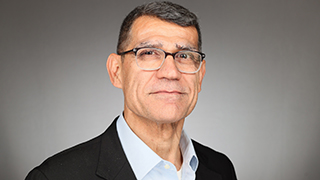
School of Diplomacy and International Relations Professor Omer Gokcekus
In February, Professor Omer Gokcekus, Ph.D., co-edited Shadow Economies in Turkic Republics, published by Palgrave Macmillan. The volume brings together research by scholars from the Turkic republics on how institutions, governance quality and corruption shape economic outcomes, based on country-level studies. For the first time, shadow economies in the region are analyzed within a comprehensive comparative framework, underscoring the book’s originality.
The book’s project was carried out during a sabbatical visit to Azerbaijan. Gokcekus commented on the opportunity to spend part of that period in Baku as a visiting scholar at the Azerbaijan State University of Economics (UNEC) and work with his co-editor, Elshan Bagirzadeh. “Being in the region and working closely together allowed us to organize the project and bring together contributors in a focused and productive way,” said Gokcekus.
The volume highlights that shadow economies remain a significant phenomenon across the member states of the Organization of Turkic States, continuing to shape fiscal capacity, labor markets and institutional development. Bound by a shared Soviet past and a common institutional legacy, these countries have long contended with informality as a "second economy," even throughout their transition to market systems. In this regard, Gokcekus emphasized that addressing informality is not merely a domestic policy issue but a broader regional development challenge. Economic cooperation, transparency, institutional strength and formalization incentives are therefore essential to sustaining economic growth and fostering public trust in governing institutions.
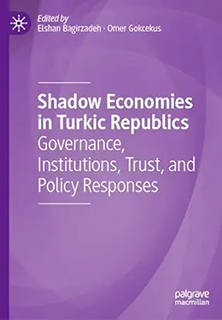
Book Cover
From a long-term perspective, the debate linking shadow economies and institutional trust is highly relevant. “When citizens and businesses do not trust public institutions, they are more likely to operate outside the formal economy, underreport income or avoid regulations. In turn, widespread informality further weakens institutions by reducing tax revenues and limiting the state’s ability to provide reliable public services,” explains Gokcekus. This dynamic produces a cyclical process: low trust encourages informality, and informality undermines institutional capacity and legitimacy. On this basis, sustainable growth is expected not just as a product of economic resources, but the result of credible institutions, fair enforcement of rules and public confidence in governance.
For the School of Diplomacy and International Relations community and all students, faculty and professionals in International Relations with an interest in international political economy and regional cooperation, this volume is a valuable read in several respects. Combining comparative analysis with theory, data and policy discussion, the book enables readers to connect academic concepts to real-world economic challenges. Students in particular can build a solid understanding of the political economy of informality and engage with a rich set of case studies that link institutional factors to economic development, illustrating how similar historical and cultural contexts can nonetheless produce divergent outcomes.
Omer Gokcekus is a professor of international economics and development at the Seton Hall School of Diplomacy. Holding a Ph.D. from Duke University, he has worked as a consultant for the World Bank, contributing to public-sector reform projects in 16 countries, and served as the economic advisor to former Turkish Cypriot President Akıncı. His research focuses on governance, corruption and wine economics, with publications in both academic and policy-oriented outlets.
Categories: Nation and World